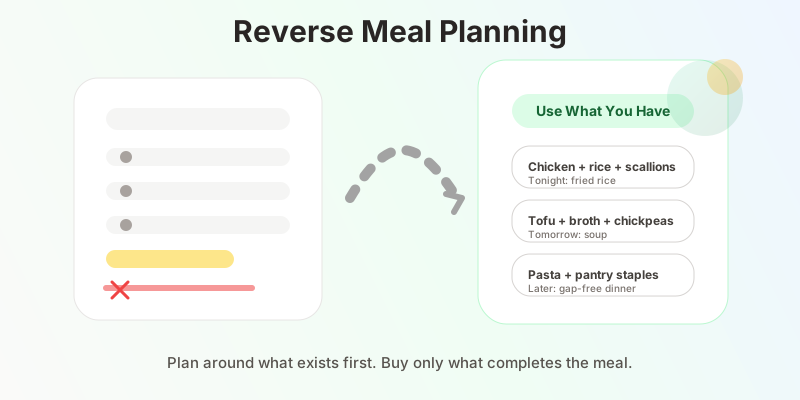
Reverse Meal Planning: Plan Around What You Have, Not What You Want
Traditional meal planning goes like this: decide what you want to eat this week, write a shopping list, buy everything on the list, and then cook those meals. It sounds organized. It looks great in a bullet journal. And for many households, it falls apart by Wednesday.
Life intervenes. A work dinner lands on Tuesday, so the salmon you planned for that night sits in the fridge until Friday, where it meets the cilantro you bought for Thursday's tacos — both now slightly past their prime. By Sunday, you're tossing wilted herbs, half a red onion, and three limes while drafting a new shopping list for next week.
Reverse meal planning flips the sequence entirely. Instead of starting with recipes and buying ingredients, you start with what you already have and plan meals around that. It's a small shift in order of operations that turns food waste from a systemic problem into an occasional exception.
Visual Summary
Same goal, different sequence
Traditional Plan
Waste Risk HighReverse Plan
Waste Risk LowerWhy Traditional Meal Planning Creates the Waste It's Supposed to Prevent
The core problem with traditional meal planning is that it treats your kitchen like an empty pantry at the start of every week. It ignores the half-bag of spinach from last week, the block of tofu that's been in the fridge since Tuesday, the broth you opened for one recipe and didn't finish.
Most households aren't starting from zero every Sunday. They're starting from a pantry with odds and ends, a fridge with several things at various stages of freshness, and a freezer with items they've largely forgotten. Traditional meal planning builds on top of all of that instead of through it, which is why the waste accumulates.
A 2024 EPA estimate put the cost of household food waste at roughly $728 per person per year, or about $2,900 for a family of four. Most of that isn't junk food or obvious impulse buys — it's fresh produce and proteins purchased with good intentions, then outlasted by a schedule that shifted.
Why Sequence Matters
How waste pressure builds across the week
Traditional, Sun
88
Reverse, Sun
24
Think of this as “waste pressure”: the share of produce, herbs, proteins, and leftovers aging faster than your schedule. Reverse meal planning keeps the curve flat because perishables get used first, instead of waiting behind aspirational recipes.
How Reverse Meal Planning Works
The process has three steps, and none of them require a meal kit subscription or a refrigerator organized like a restaurant prep station.
Framework
The three-step reverse planning loop
Scan what exists
Fridge, pantry, freezer. Two minutes is enough.
Anchor meals on perishables
Use the items with the shortest runway first.
Shop to complete
Buy missing pieces, not a whole new plan.
Step 1: Take stock before you plan
Before you think about what you want to eat, look at what you actually have. Open the fridge and assess what's closest to turning. What needs to be used in the next 2 to 3 days? Check the pantry for open packages that should be finished: half a box of pasta, a can of coconut milk, lentils you bought for a recipe you never made.
This doesn't need to be a formal inventory. A two-minute scan is enough. The goal is simply to know what exists before you decide what to buy.
Step 2: Build meals around perishables first
Whatever is most perishable becomes the anchor of your next 2 to 3 meals. If you have ground turkey that needs to be used today, tonight is turkey night — tacos, stir-fry, pasta, or anything else ground turkey slots into. If half a head of cabbage has been in the crisper for five days, it goes into slaw, soup, or fried rice before you buy anything new.
This isn't about eating whatever random combination your fridge contains. It's about using perishables as the constraint that drives the meal decision, rather than inspiration or habit.
Step 3: Buy to complete, not to start
Only after you've identified what you're cooking around your existing inventory do you make a shopping list, and that list is limited to what you need to complete those meals. A few aromatics. A missing vegetable. The specific spice the recipe calls for. Not a fresh slate.
This is where grocery spend actually drops. Households that reverse-plan tend to buy smaller quantities more frequently, which means fresher food and less spoilage.
Reading this on your computer?
Email yourself the GroceryTrack app install link so it's waiting on your phone — no searching the App Store later.
One-time email. No newsletter, no spam.
The Mindset Shift: Recipes Serve the Ingredients, Not the Other Way Around
The deeper change in reverse meal planning is about your relationship with recipes.
Traditional cooking culture, whether it comes from cookbooks, food blogs, or meal-prep YouTube, presents recipes as the fixed point. You find a recipe you want to make, then acquire what it requires. The ingredient list becomes a shopping list.
Reverse meal planning inverts this. The ingredients you have are the fixed point, and the recipe is what you find or improvise around them. This calls for a slightly different cooking skill set: knowing which flavor profiles play well together, which proteins are interchangeable, and that most vegetables that roast alone will also roast together.
Sheet pan meals, stir-fries, grain bowls, frittatas, soups, and fried rice are the workhorses because they accept almost any vegetable and most proteins without complaint.
Flexible Recipes
Six base meals that absorb what you already own
| Base meal | What it absorbs well | Typical extra buy |
|---|---|---|
| Stir-fry | Wilted greens, broccoli, tofu, chicken | Soy sauce or aromatics only |
| Fried rice | Leftover rice, eggs, scallions, scraps | Usually nothing |
| Soup | Open broth, beans, soft vegetables | One herb or lemon |
| Frittata | Eggs plus almost any vegetable | Cheese if needed |
| Grain bowl | Roasted vegetables, proteins, sauces | One fresh topping |
| Sheet pan dinner | Mixed vegetables and one protein | Seasoning gap-fillers |
One practical shortcut: keep a small mental or written list of 5 or 6 base meals your household always eats that can absorb different ingredients. You don't need to reinvent dinner each time. You just need a structure that helps you slot in what you already have.
Where Grocery Tracking Makes This Practical
Reverse meal planning is significantly easier when you know what you've bought recently.
Most people don't track their purchases beyond a vague sense of what's in the fridge. They buy cilantro, use a handful, and forget about it until they find it again four days later. They buy a second container of something they already had because they couldn't remember whether they were out.
When you scan your receipts into GroceryTrack, you get an item-level record of everything you've purchased, organized by category, store, and date. That record becomes the foundation for reverse meal planning.
Data Advantage
Where tracking makes reverse planning practical
What GroceryTrack adds
See what you bought this week before you shop again
Catch duplicate purchases before they become fridge clutter
Notice recurring waste patterns by item, date, and category
Plan from real habits instead of aspirational ones
- See what you bought this week before you plan meals or shop again
- Spot recurring waste patterns before they become routine
- Track what you actually eat versus what you thought you would eat
Over time, your purchase history becomes a picture of your real eating habits, not your aspirational ones. Reverse meal planning built on real data is much more effective than reverse meal planning built on hope.
A Practical Example: One Week of Reverse Meal Planning
Here's what this looks like in practice for a two-person household in the middle of the week.
Worked Example
Mid-week example: inventory turns into dinners
Fridge
Pantry
Resulting plan
Chicken fried rice
rice, chicken, zucchini, scallions, eggs
Tofu + chickpea soup
tofu, broth, chickpeas, garlic, ginger
Pantry pasta
pasta, remaining chickpeas, olive oil
Shopping list
Maybe one lemon. Maybe one head of garlic.
Three nights of dinner come from ingredients already in the house, plus a tiny shopping list. That's the whole point. The system is not trying to make you more ambitious. It's trying to make you more efficient.
Reverse Meal Planning Isn't Zero Planning, It's Smarter Planning
To be clear: reverse meal planning isn't winging it every night or refusing to plan ahead. It works best when you have a few base meals you know by heart, a habit of checking what you have before you shop, and some flexibility about what specifically goes into those meals.
What it removes is the rigid commitment to a specific recipe before you know what's available. That commitment is what creates the classic "I bought it for a recipe I didn't make" problem — and across a year, that pattern is where a surprising amount of household food spending quietly disappears.
GroceryTrack tracks every item on your receipt, so you always know what you've bought recently. Scan your receipts before your next shopping trip and reverse meal plan from real data.

Get started
Every new GroceryTrack account comes with a 30-day free trial of all Pro features—unlimited scans, full history, and advanced analytics. No credit card needed.
After the trial, basic features remain free. If you want the full experience, the Pro plan is available at $3.99/month for early adopters.
Start scanning