Seasonal Fruits and Vegetables: What to Buy Each Month
Eating seasonal produce is one of the simplest changes you can make to lower your grocery bill, eat better-tasting food, and reduce your environmental footprint — all at once. When fruits and vegetables are in season locally, they're harvested at peak ripeness, shipped shorter distances, and priced to move. Out-of-season produce travels farther, sits longer, and costs more.
This guide breaks down what's in season by month — and how that calendar shifts depending on whether you're on the West Coast, East Coast, or in the Midwest. Because a strawberry in March in California is a very different situation from a strawberry in March in Minnesota.
What's In Season: October
Vegetables
Fruits
Budget tip: Winter squash is cheapest now. It stores for months.
Why Seasonal Eating Saves You Money
Produce prices follow supply and demand. When strawberries ripen across the country in late spring, supply spikes and prices drop. When you buy strawberries in December, they've been flown in from South America — and you're paying for that flight.
The price difference is real. According to USDA retail produce price data and consumer research, seasonal fruits and vegetables can be 30–50% cheaper than their off-season equivalents. For a household spending $200/month on produce, that's a potential savings of $60–$100 per month simply by shifting what you buy and when.
Seasonal Price Comparison
Typical per-pound price: in-season vs. off-season. Source: USDA ERS Fruit and Vegetable Prices
Seasonal eating also reduces food waste. In-season produce tends to be fresher at the point of sale, which means it lasts longer in your fridge — reducing the odds of opening the crisper drawer to a bag of disappointment.
What's In Season: Month by Month
Here's a general guide for the contiguous U.S. (USDA climate zones vary — warmer states like California, Florida, and Texas often have extended or earlier seasons).
January & February — Root Vegetables and Citrus Season
Vegetables: Beets, Brussels sprouts, butternut squash, cabbage, carrots, cauliflower, celery root, kale, leeks, parsnips, rutabaga, sweet potatoes, turnips, winter squash
Fruits: Blood oranges, clementines, grapefruit, kiwi, kumquats, lemons, navel oranges, pears, pomelos, tangerines
What to cook: This is the season for long braises, hearty soups, and roasted root vegetables. Citrus is at its peak — great for vinaigrettes, glazes, and adding brightness to winter dishes.
Budget tip: Citrus is abundant and cheap from January through February. Buy extra clementines and blood oranges before March arrives.
March & April — Early Spring Greens
Vegetables: Artichokes, asparagus, broccoli, cabbage, green onions, leeks, mushrooms, peas, radishes, rhubarb (technically a vegetable), spinach, Swiss chard
Fruits: Strawberries (late April, Southern states), navel oranges, pineapple
What to cook: Spring greens are tender and don't need much — a quick sauté with olive oil and garlic, or raw in salads. Asparagus is one of the great pleasures of early spring; it's also one of the most overpriced produce items in November.
Budget tip: Asparagus peaks in April. Buy it now for a fraction of what it costs in fall. Radishes are one of the cheapest vegetables per pound all spring.
May & June — Peak Berries and Stone Fruit Begin
Vegetables: Arugula, beets, broccoli, cabbage, cucumbers, fennel, garlic scapes, green beans, kohlrabi, lettuce, peas, radishes, spinach, zucchini (late June)
Fruits: Apricots (late May), blackberries, blueberries (late June), cherries, peaches (late June, Southern states), rhubarb, strawberries
What to cook: May and June are when American produce really opens up. Strawberries hit their national peak and the price drops noticeably. Cherries arrive and leave quickly — buy them when they're cheap and freeze what you can't eat.
Budget tip: Freeze excess strawberries and cherries in June at peak-price lows for smoothies and baking through the fall and winter.
July & August — Summer Peak: Tomatoes, Corn, Melons
Vegetables: Bell peppers, corn, cucumbers, eggplant, green beans, hot peppers, okra, summer squash, tomatoes, zucchini
Fruits: Blackberries, blueberries, cantaloupe, figs, grapes, nectarines, peaches, plums, raspberries, watermelon
What to cook: This is the most abundant season on the calendar. Tomatoes in July and August are a different food from what's sold in January. This is the window for fresh salsa, caprese, gazpacho, and grilling everything.
Budget tip: Tomatoes, corn, and watermelon are often loss-leader prices in July and August at major grocery chains. This is when to stock up — roast and freeze tomatoes in batches for winter pasta sauces.
September & October — The Second Harvest: Apples, Squash, Root Vegetables
Vegetables: Broccoli, Brussels sprouts, butternut squash, cabbage, cauliflower, garlic, kale, leeks, parsnips, pumpkin, sweet potatoes, turnips
Fruits: Apples, cranberries (late October), figs, grapes, pears, persimmons, pomegranates, quinces
What to cook: Fall is apple and squash season. The variety of apples available in October from local orchards far exceeds what's on the standard supermarket shelf. This is the time to stock the pantry with winter squash, which keeps for months.
Budget tip: Butternut squash, acorn squash, and sweet potatoes are cheapest in October. Buy several and store them in a cool, dark place — they'll last well into December.
November & December — Citrus Returns, Root Vegetables Dominate
Vegetables: Brussels sprouts, cabbage, carrots, celery root, kale, parsnips, rutabaga, sweet potatoes, turnips, winter squash
Fruits: Clementines, cranberries, grapefruit, kiwi, oranges, pears, persimmons, pomegranates, pomelos
What to cook: The wheel turns back to roots and citrus. Cranberries are cheapest right before and after Thanksgiving — freeze a bag or two for the rest of winter. Brussels sprouts on the stalk appear in stores and are often better value than loose ones.
Budget tip: Clementines flood grocery stores from November through January at some of the lowest per-pound fruit prices of the year. They're one of the best snack values in any season.
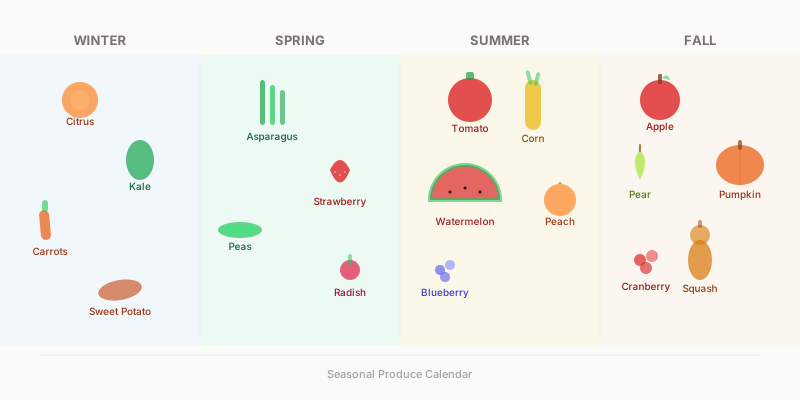
Quick Reference: Seasonal Produce by Season
Winter
Dec – Feb
Vegetables
Fruits
Spring
Mar – May
Vegetables
Fruits
Summer
Jun – Aug
Vegetables
Fruits
Fall
Sep – Nov
Vegetables
Fruits
Reading this on your computer?
Email yourself the GroceryTrack app install link so it's waiting on your phone — no searching the App Store later.
One-time email. No newsletter, no spam.
How the Season Differs by Region
The month-by-month guide above reflects national averages, but where you live matters a lot. The U.S. spans multiple USDA hardiness zones, and seasonal timing can shift by four to six weeks between the coasts and the interior.
West Coast (California, Oregon, Washington)
The West Coast — and California in particular — is the engine of the U.S. produce supply. California alone grows roughly one-third of all vegetables and two-thirds of all fruits and nuts sold in American grocery stores, according to the California Department of Food and Agriculture.
What's distinctive:
- Strawberries nearly year-round. California's Watsonville and Oxnard growing regions produce strawberries from February through October. West Coast shoppers can buy locally grown, in-season strawberries in March when they're still imported from South America everywhere else.
- Asparagus arrives in February. In the Sacramento Valley, asparagus season starts a full two months before the Midwest.
- Tomatoes have a long window. California field-grown tomatoes peak June through November — significantly longer than the Midwest's July–August sprint.
- Citrus is actually local. Southern California grows navel oranges, blood oranges, Meyer lemons, and avocados. From November through May, West Coast shoppers can buy citrus with a short supply chain.
- Washington State = apples and cherries. Washington is the largest apple-producing state in the U.S., growing more than half the nation's apple crop. Apples from local WA orchards start arriving in August and run through November. Bing cherries from the Yakima Valley hit markets from late May through July.
- Pacific Northwest berries. Oregon and Washington are known for marionberries, Rainier cherries, Concord grapes, blueberries, and hazelnuts — most peaking July through September.
East Coast (New England, Mid-Atlantic, Southeast)
The East Coast has four genuine seasons and a growing calendar that reflects it. Spring arrives later than the West Coast but earlier than the Midwest, with some iconic produce identities: New Jersey tomatoes, New England cranberries, Hudson Valley apples, and the Chesapeake's leafy greens.
What's distinctive:
- Strawberries peak late May–June. New Jersey has a strong historical reputation for strawberry growing on the East Coast. The season is short — often just 3–4 weeks of peak local supply — which makes them worth tracking and buying in quantity when they arrive.
- Asparagus comes in late April–May. Delaware, New Jersey, and Virginia all grow asparagus. The East Coast season follows the West Coast by about six weeks.
- Jersey tomatoes are a real thing. New Jersey's tomato season (July–September) is considered among the best in the country. The combination of sandy soil and humid summer heat produces tomatoes with high sugar content.
- Corn peaks in July–August. Eastern Shore corn (Maryland, Delaware) and New England sweet corn are summer staples. August corn at a farm stand is worth the trip.
- New England and New Jersey cranberries. Massachusetts (Cape Cod) and New Jersey (Pine Barrens) are the two largest cranberry-producing regions on the East Coast. Fresh cranberries arrive in October and are cheapest right before and after Thanksgiving.
- New York and Virginia apples. New York is typically the second-largest apple-producing state in the U.S. after Washington, and Virginia consistently ranks in the top six. October is apple country from Maine to the Carolinas — variety selection at a local orchard far exceeds the supermarket.
- Leafy greens have two seasons. The East Coast gets a spring green season (April–June) and a fall green season (September–November). Summer heat causes spinach and lettuce to bolt, so local greens dip in July–August before returning in the fall.
Midwest (Illinois, Iowa, Michigan, Minnesota, Ohio, Wisconsin)
The Midwest has the shortest growing season of the three regions, bookended by hard frosts. Last frost typically falls between late April and mid-May; first frost returns in September or October. What the Midwest lacks in length, it makes up for in intensity — summer produce here arrives fast, peaks quickly, and is often exceptionally good.
What's distinctive:
- Strawberries arrive in June. Midwest strawberry season typically runs mid-June through early July — roughly two to four weeks behind the East Coast. The window is about three weeks in most states.
- Asparagus peaks in May. Michigan, Wisconsin, and Illinois all grow asparagus, with peak season in May. Michigan is one of the largest asparagus-producing states nationally.
- Michigan cherries are world-class. Traverse City, Michigan calls itself the Cherry Capital of the World. Michigan produces about 75% of the tart cherries grown in the U.S. Sweet cherries peak late June–July; tart cherries used for baking peak in July.
- Corn and tomatoes have a concentrated peak. Midwest sweet corn and tomatoes peak hard in July and August, then largely disappear. This compression creates strong price drops during peak weeks — and strong price jumps before and after.
- Michigan blueberries. Michigan is one of the leading blueberry-producing states in the U.S. Local Midwest blueberries peak July–August at some of the lowest prices of the year.
- Wisconsin cranberries. Wisconsin is the largest cranberry-producing state in the country — larger than Massachusetts, producing roughly 60% of the U.S. cranberry crop. Fresh Wisconsin cranberries arrive in October at competitive prices.
- Apples and squash dominate fall. Michigan, Wisconsin, and Ohio have significant apple orchards. October is prime apple month, and butternut squash, acorn squash, and pie pumpkins are at their cheapest and most abundant.
- Rhubarb is a Midwest staple. If you grew up in the Midwest, you know rhubarb. It peaks in May–June and is one of the earliest harbingers of the growing season.
Regional Timing Comparison
| Produce | West Coast | East Coast | Midwest |
|---|---|---|---|
| Strawberries | Feb–OctCA peak Apr–Jun | Late May–JunNJ, NC | Mid-Jun–JulIL, WI |
| Asparagus | Feb–AprSacramento Valley | Late Apr–MayNJ, VA | May–JunMI, WI |
| Cherries | Late May–AugWA, CA | Jun–Jul | Late Jun–JulMI |
| Tomatoes | Jun–NovCA field-grown | Jul–SepNJ | Jul–Aug |
| Sweet corn | Jun–Aug | Jul–AugMD, NE | Jul–Aug |
| Blueberries | Jul–SepOR, WA | Jul–AugNJ, ME | Jul–AugMI |
| Apples | Aug–NovWA | Sep–NovNY, VA | OctMI, WI |
| Cranberries | —Not locally grown | Oct–NovMA, NJ | Oct–NovWI |
| Citrus | Nov–MaySouthern CA | Year-roundImported | Year-roundImported |
| Rhubarb | Mar–Jun | Apr–Jun | May–Jun |
Dates are approximate and vary by year, elevation, and microclimate. Sources: USDA SNAP-Ed Seasonal Produce Guide, CDFA Agricultural Statistics
How to Shop Seasonally Without Memorizing a Chart
You don't need to memorize this guide. A few habits make seasonal shopping automatic:
Follow the price tags
If a fruit or vegetable is suddenly cheaper than usual, it's almost certainly in season. Pale January tomatoes at $6/lb? Not in season.
Track your spending
When you track what you buy, you see seasonal price cycles in your own data — and spot when you're buying out of season.
Shop the sale displays
Front-of-store displays at grocery chains feature whatever's most abundant. That's usually what's in season — and at the best price.
Visit a farmers market
What's at the farmers market is definitionally in season locally. Even a monthly visit gives you a quick education on regional timing.
Use a grocery tracker. When you track what you buy and what you spend, you start to see the seasonal price cycles in your own data. GroceryTrack categorizes every item on your receipt, so you can see exactly how much you spent on produce month over month — and spot which categories are creeping up when you're buying out-of-season.
Visit a farmers market once a month. What's there is definitionally in season locally. Even if you don't buy everything there, it's a quick education on what your region grows and when.
The Environmental Angle
Eating seasonally isn't just a money move — it's a lower-carbon choice. Out-of-season produce is often grown in heated greenhouses or shipped by air freight from the southern hemisphere, both of which have significantly higher carbon footprints than locally grown, in-season equivalents. Studies, including lifecycle analyses published in Environmental Science & Technology and reviewed by Our World in Data, have found that greenhouse-grown tomatoes in winter can have a carbon footprint 3–8x higher than field-grown summer tomatoes, depending on the heating source and region.
Carbon Footprint: Seasonal vs. Off-Season
Relative CO₂ emissions per kg of produce (1x = seasonal baseline). Source: Our World in Data — Food & Carbon
Key takeaway: Heated greenhouse produce and air-freighted imports can have 3–8x the carbon footprint of locally grown, in-season equivalents.
At scale, shifting household produce buying toward seasonal foods is a meaningful reduction in food-related emissions — without giving anything up.
Start Tracking What You Buy
Seasonal eating is easiest when you can see your own patterns. If you're curious how your produce spending shifts month by month — and whether you're consistently buying things at their cost peak — GroceryTrack can show you. Scan your grocery receipts and see a full breakdown by category, item, and store.

Get started
Every new GroceryTrack account comes with a 30-day free trial of all Pro features—unlimited scans, full history, and advanced analytics. No credit card needed.
After the trial, basic features remain free. If you want the full experience, the Pro plan is available at $3.99/month for early adopters.
Start scanning
Sources
- USDA ERS Fruit and Vegetable Prices — Retail produce price data used for seasonal savings estimates
- USDA SNAP-Ed Seasonal Produce Guide — Monthly availability by region
- California Department of Food and Agriculture Statistics — CA production data (one-third of U.S. vegetables, two-thirds of fruits and nuts)
- USDA NASS Crop Production Reports — State-level fruit and vegetable production data
- Our World in Data — Food: Is Eating Local Important? — Carbon footprint comparisons for food transport and production methods
- National Cherry Festival — Traverse City, MI tart cherry industry
- USDA Plant Hardiness Zone Map — Regional growing zone reference
Seasonal availability varies by USDA climate zone, elevation, and year. Dates above reflect general U.S. availability; local growing seasons in the Northeast and Midwest may run 2–4 weeks later than the South and Pacific Coast.