Seven months of GroceryTrack: a pile of receipts, two app stores, and the month we almost didn't launch
By Xinjiang Shao, founder
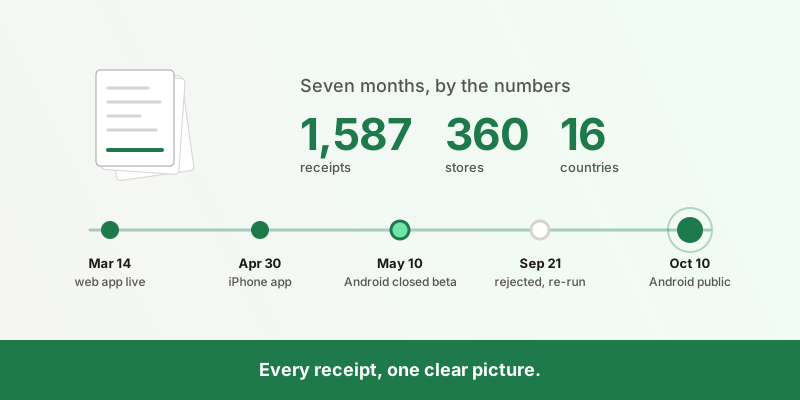
GroceryTrack went live on March 14, 2026, one day after I decided to build it. On October 10 it reached the last place it needed to be: Google Play, for everyone, with the iPhone app getting its tenth release the same afternoon. This is the story in between, told with the numbers rather than around them, because the numbers are the honest part.
Why a receipt tracker
For years I had been curious about what I actually eat. Not in a dieting way. I wanted to know how often I buy the same things, which store I really spend the most at, and whether the number on the receipt had been creeping up or I just felt like it had. Every so often I would try to work it out from a pile of receipts on the counter, get about a third of the way through, and give up.
This spring, with food prices climbing again, that curiosity turned into a project. I did not want to type anything. I did not want to link a bank account, because a bank statement says "$94 at Trader Joe's" and nothing else. I wanted to take a photo of the receipt and have the items, prices and categories read off it, and then look at the result the way you would look at a dashboard. So that is what the first version did: scan, extract, chart. It was rough, it worked end to end, and I put it online the next day.
I built it for one person. That turned out to be the right way to start and the wrong way to think about it.
March to April: the habit, then the phone
The first month was about making the loop worth repeating. A pantry that knew what you had bought, so you could mark things eaten or thrown out. A weekly email on Wednesdays saying where the grocery money went. Then, on March 24, a Product Hunt launch, which brought the first people I had never met.
Two things in April set the direction for everything after. On April 17 GroceryTrack got an MCP server, which lets you connect Claude, ChatGPT or any compatible assistant to your own receipts and ask questions about them in plain language. No other grocery app does that, and it is still the feature people write to me about most. On April 30 the iPhone app went live on the App Store, because scanning is something you do in the parking lot, not at a laptop, and a web app cannot be there.
The iPhone app has out-shipped everything since: ten releases from 1.0 to 1.9, roughly one every three weeks. Editing any line on a receipt. A smart pantry that knows the fridge from the freezer. A two-step review after every scan so a misread price never reaches your history. An Ask tab that answers "what do I buy most often?" from your own data. Clearer categories, which landed today.
May to September: the part that did not go to plan
Android opened as a closed beta on Google Play on May 10. I assumed it would be public within a month. It took five.
Google requires a new developer to run a closed test with at least 12 testers for 14 days, and then apply for production access. We applied on September 20 and were rejected on September 21, in about a day, with a template that said more testing was required and that testers were not engaged.
The rejection was fair. Reading our own numbers back, we had met the headcount on a technicality and failed the point of the exercise. For the last five days of the window, the only build on the track had shipped with an empty release note, so the testers who did open it had been told nothing. Of the people opted in, a handful had scanned a receipt. A tester who installs and never opens the app is exactly what the review is designed to catch.
So we did not polish the application. We re-ran the test properly: real release notes written for the people reading them, builds with fixes testers had actually asked for, a feedback prompt after the third scan, and a dozen patient people who kept scanning for another 14 days. We applied again on October 7 and were approved. On October 10, GroceryTrack 1.8.1 went public on Google Play in the United States.
I am writing this part down because it is the kind of thing a company blog usually leaves out. It cost a month and it made the app better, which is not the same as saying it was fun.
What it added up to
Since March, the people using GroceryTrack have scanned or forwarded 1,587 receipts, covering 14,329 items and $163,924 of grocery spending, from 360 different stores.
The number that surprised me is sixteen. That is how many countries those receipts have come from. I built this for an American grocery problem, and before that for a me problem. Receipts now arrive from Canada, France, the United Kingdom, Germany, Portugal, Singapore, Morocco and a dozen more, in their own currencies, with their own store names and their own abbreviations for cilantro. Food is a big part of my life and my culture, so the part of this that has surprised me most is other people's.
Where it stands today
Here is the honest state of the product, October 10, 2026.
Three places to use it, one account. The web app at grocerytrack.food, the iPhone app, and now the Android app, all reading and writing the same receipts. Scan a receipt in the checkout line, review the charts on a laptop at home.
Four ways to add a receipt. Snap a paper one. Forward a digital one from Instacart, DoorDash, Walmart, Costco or any store that emails you. Share a PDF, an image or a link to an online receipt from Mail, Gmail, Files or your browser. Or, with no receipt at all, take a photo of the groceries on the counter and let Grocery Snap estimate it.
What you get back. A monthly total with restaurant trips kept separate so the grocery number is honest. A budget with a pace line. Categories with amounts and percentages, and from today, thirteen of them with plain rules so two people put the same item in the same place. Top stores by visits and average spend. A pantry with freshness estimates, a shopping list built from what is running low, and recipe ideas from what you already have. An Ask tab, and the MCP server if you would rather use your own assistant.
What it costs. Nothing to start. Every account gets 30 days of Pro, then a free plan with 10 scans a month and three months of history. Pro is $3.99 a month or $39.99 a year, and you can cancel from your account on any platform. We do not sell your data, there are no ads, and there are no third-party trackers.
What it is not yet. Shared households, where two people's receipts land in one place with both of them signed in, is the most requested thing we have not built. Budget alerts that reach you before the month is over, not after. Detecting several receipts in one photo. These are on the public changelog as planned, and that is where I would rather you read about them than here, because here I would be tempted to promise dates.
What I have learned, in case it is useful
Ship the small thing, then watch. The first version was embarrassing and it was live in a day. Every feature since came from watching what people did with it, not from what I imagined they would do.
Do not argue with a gate; meet it. The Google rejection stung, and the instinct was to write a better application. The right move was to run a better test. The metrics were the argument.
Honesty is a feature. Restaurant trips excluded from the grocery total. Bag fees and deposits kept on the receipt but out of the charts. Estimated prices marked as estimates. Every one of those decisions made a number slightly less impressive and the product more trustworthy. I would make all of them again.
The itch was not just mine. Sixteen countries.
If you have been using GroceryTrack, thank you. Your feedback shaped the last seven months, and it will shape the next. If you have not, the web app takes about 30 seconds to try, and the Android app is now a tap away.
Get started
Every new GroceryTrack account comes with a 30-day free trial of all Pro features—unlimited scans, full history, and advanced analytics. No credit card needed.
After the trial, basic features remain free. If you want the full experience, the Pro plan is available at $3.99/month for early adopters.
Start scanning